


FiveX now displays AI usage in euros instead of credits. No more guessing what 500 credits translates to in real money: you see the actual cost per AI action, per day, per feature. This change comes with three new capabilities on the subscription page.
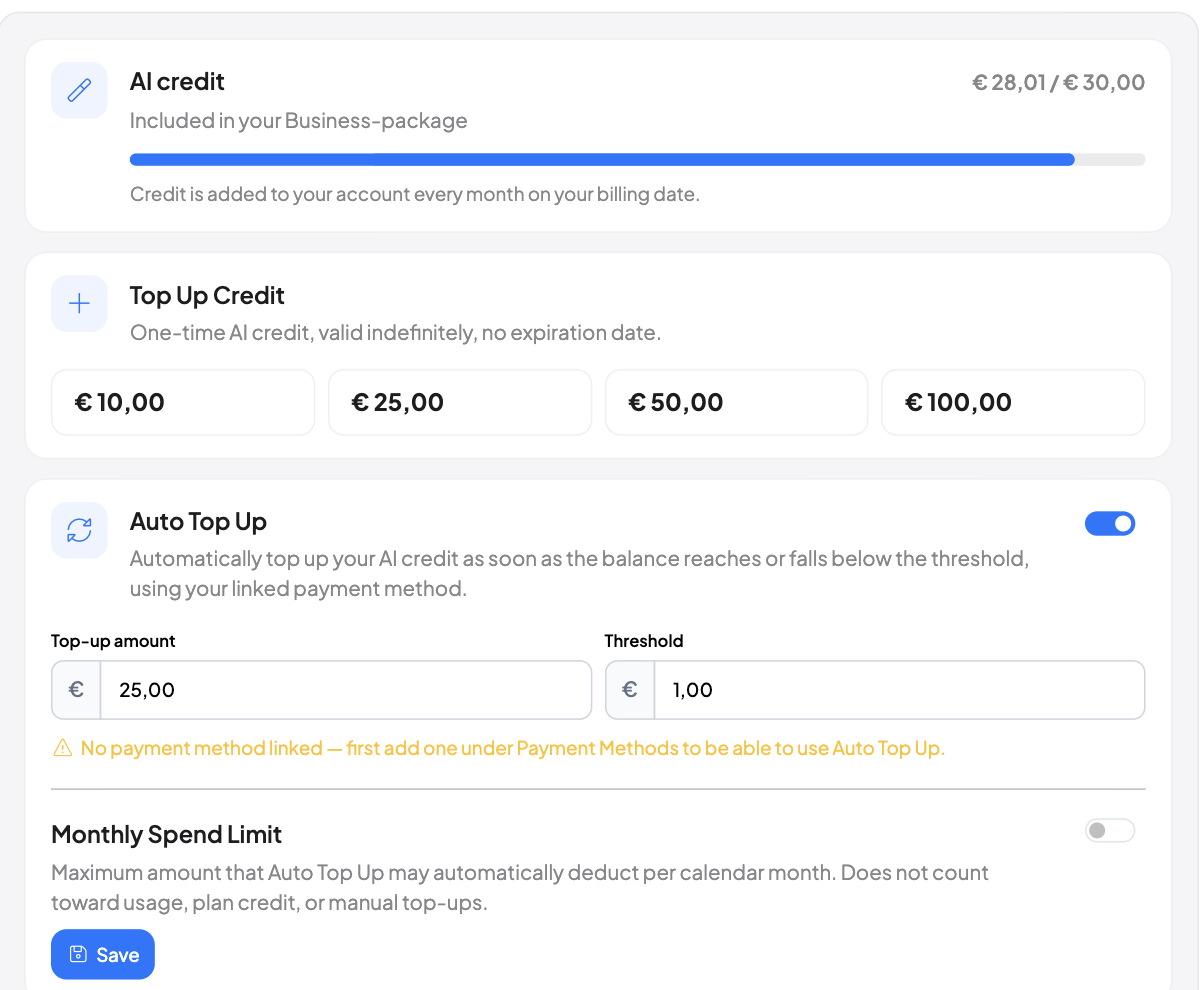
Wallet gate
A wallet gate ensures AI features only run when your wallet has sufficient balance. If the balance drops to zero, AI actions pause gracefully instead of silently failing or racking up unexpected charges. You get a notification before the threshold is reached, so you can top up in time.
Pricing settings
The new pricing settings panel gives you granular control over how AI usage is billed. You can set spending limits per feature, view historical usage trends, and adjust your configuration at any time. The goal is simple: full transparency on what each AI action costs, before you run it.
Auto top-up
Auto top-up lets you set a minimum balance threshold and a top-up amount. When your wallet drops below the threshold, FiveX automatically charges the configured amount so your AI workflows never skip a beat. You can disable or adjust this at any time from the subscription page. A separate monthly spend limit caps how much Auto Top Up can charge per calendar month, on top of your regular usage, so recurring top-ups stay predictable even on a busy month.
Why this matters
Credits are opaque. You never quite know how many credits a single AI action consumes, and the exchange rate to real money is hard to reason about. By switching to euros, FiveX makes AI costs as legible as any other line item on your invoice: ad spend, marketplace fees, and now AI usage, all in the same currency.
Operator impact
For marketplace teams, this is more than a billing change. AI features increasingly support operational work: product title suggestions, campaign analysis, reporting drafts, support triage and data investigations. When those actions are priced in abstract credits, teams struggle to decide which automations are worth running every day and which should stay occasional. Euro-based usage makes the trade-off visible.
A practical example: if an AI product analysis costs €0.18 and saves a specialist six minutes, the economics are obvious. If a bulk workflow would cost €22 and only produces a nice-to-have summary, the team can decide to skip it. None of this is meant to make people nervous about using AI. It's meant to make AI behave like every other operating cost: measurable, budgeted and connected to value.
The wallet gate and auto top-up also help prevent broken workflows. A low balance should not silently stop product research, reporting or ad analysis in the middle of a busy week. Clear thresholds let finance keep control without slowing operators down. That combination matters for brands running FiveX as part of daily operations, beyond just reporting.
There is also a planning benefit. When AI usage is visible in euros, teams can compare it with manual specialist time, agency hours and reporting overhead. That makes budget conversations calmer. Teams can put more budget behind automation that removes repetitive work, and hold back where AI doesn't yet improve the decision.